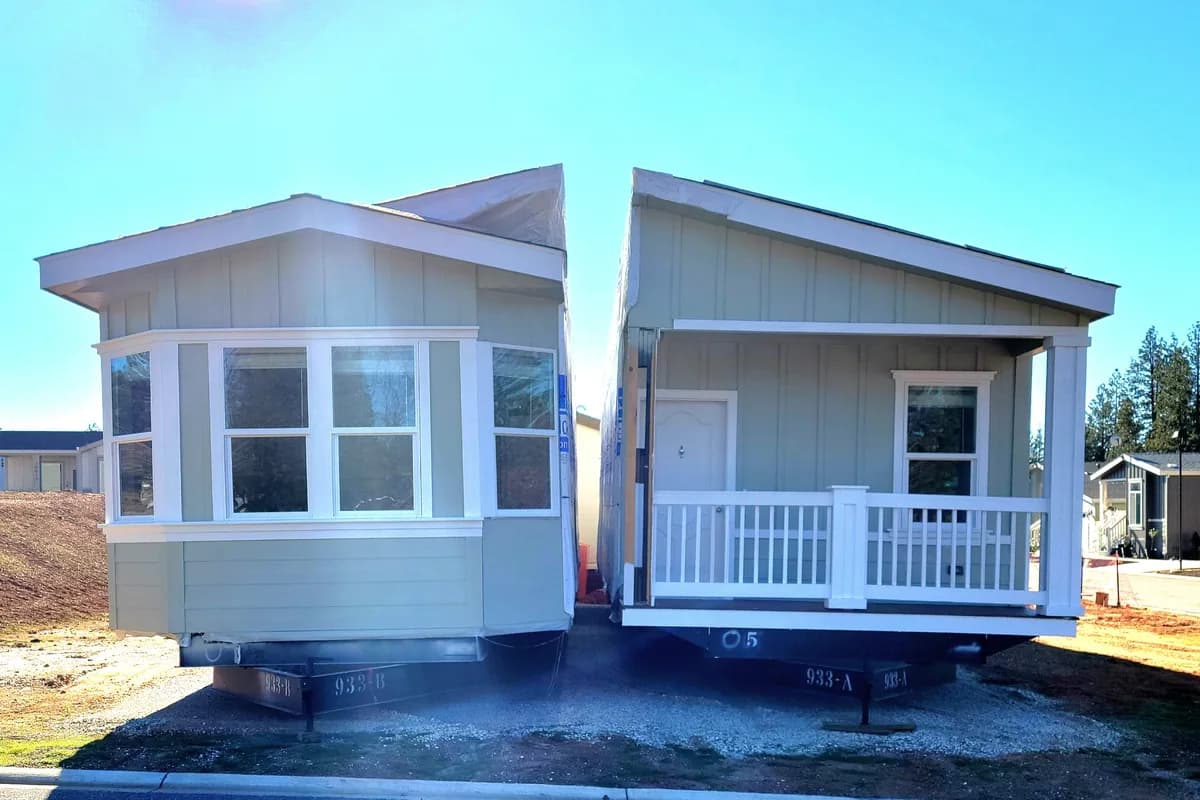
The support system, from the top down
- Steel I-beams (main frame rails): Two or more beams run the length of each section. They carry the floor system, and they are what the piers push up against.
- Piers: Vertical supports placed under the beams at intervals. Older Kern County homes often have stacked concrete block piers; newer or re-supported homes may use adjustable steel pier stands. Multi-section homes also need piers along the marriage line where the halves meet.
- Footing pads: The base each pier sits on—poured concrete, precast pads, or engineered plastic (ABS) pads. The pad spreads the load across the soil. If the soil under one pad softens or shrinks, that pier drops.
- Caps, shims, and wedges: Thin caps sit on top of block piers. Hardwood shims or wedges fill the final gap to the beam. These are the parts most often found loose, cracked, or missing during an inspection.
- Skirting: Not structural, but it controls access. Most leveling work starts by opening a panel or two so the crew can see the pier line.
How Kern County soil and water move the piers
A pier rarely fails on its own. What changes is the ground under its footing pad. Valley soils around Bakersfield, Shafter, and Wasco can dry out and shrink through long summer heat, then soften when winter rain arrives or when irrigation and sprinklers wet one side of a space. Irrigation-heavy farm areas around Delano, Lamont, and Arvin, and parks where yard watering runs close to the skirting, can see uneven settlement along one wall.
Common water sources worth checking before a visit: a leaking hose bib, a drip line or sprinkler aimed at the skirting, a downspout or AC condensate line dumping next to the home, and low spots where rain ponds after a storm. Fixing the water source matters—a re-level on wet, moving soil may not hold as long. Our re-leveling frequency guide covers how these cycles affect timing.
What you can safely notice from outside
You do not need to crawl under the home to give a useful description. From outside and inside, note:
- Skirting that bows, buckles, or has pulled away at one corner
- Shims or wood pieces visible on the ground through a skirting gap
- Block piers that look tilted or cracked when you shine a light through an access panel
- Floors that slope toward one wall, or a dip along the center of a double-wide
- Doors that drag or swing open on their own, and gaps forming at trim or ceiling seams
Avoid crawling under the home yourself, especially in a park space—parks often restrict under-home work, and a shifted pier can move. For a full symptom list, see signs your mobile home needs leveling.
What a leveling visit typically adjusts
A leveling visit generally checks the beam line with a level or water level, then lifts low areas and resets shims, wedges, or caps so each pier carries its share again. Where a pad has sunk or a block pier is cracked, the scope may include resetting or replacing that pier and pad. Marriage-line piers on double-wides and triple-wides get special attention because uneven support there shows up as ceiling and wall seams opening.
Every home is different, and the right scope depends on what the crew finds once skirting is open. Pier count, how many need resetting, skirting removal, and travel across Kern all influence a quote. See leveling cost factors for what typically moves an estimate, and the leveling-day prep guide for access tips.
Piers vs earthquake bracing
Piers and pads hold the home up. Earthquake-resistant bracing systems are a separate product meant to address sideways movement during shaking, and they are often requested by parks, insurers, or buyers in escrow. A home can be perfectly level and still lack bracing—or be braced and still need re-leveling. Read bracing vs leveling in Kern County or visit the earthquake bracing page if both are on your list.
Local notes across Kern communities
Bakersfield and Oildale: Many older park homes still sit on original block piers. Ask your manager whether neighbors on the same row have had piers reset—it often hints at similar pad ages and soil conditions.
Delano, Wasco, and Shafter: Farm irrigation and canal-adjacent lots can keep soil moisture uneven. Note which side of the home gets wet and when.
Lamont and Arvin: Private lots and smaller parks may have mixed pier types from past repairs. Any old invoices or photos help a crew understand what is there.
Taft and Tehachapi: West-side hillside lots and Tehachapi’s colder winters bring their own drainage and access questions. Share slope, gate, and driveway notes when you request help.
What to send when you request help
- City or ZIP and park name / space number if applicable
- Photos through a skirting gap or access panel, if you can take them safely
- Which rooms slope, which doors stick, and when you first noticed it
- Any water issues near the skirting and whether they have been fixed
- Whether a sale, Title 25 inspection, or park notice is driving your timeline
Ready for next steps? Contact Bakersfield Mobile Home Leveling or call (661) 555-0140. You can also browse the mobile home leveling service page or all Kern County guides.