Two different layers, two different fixes
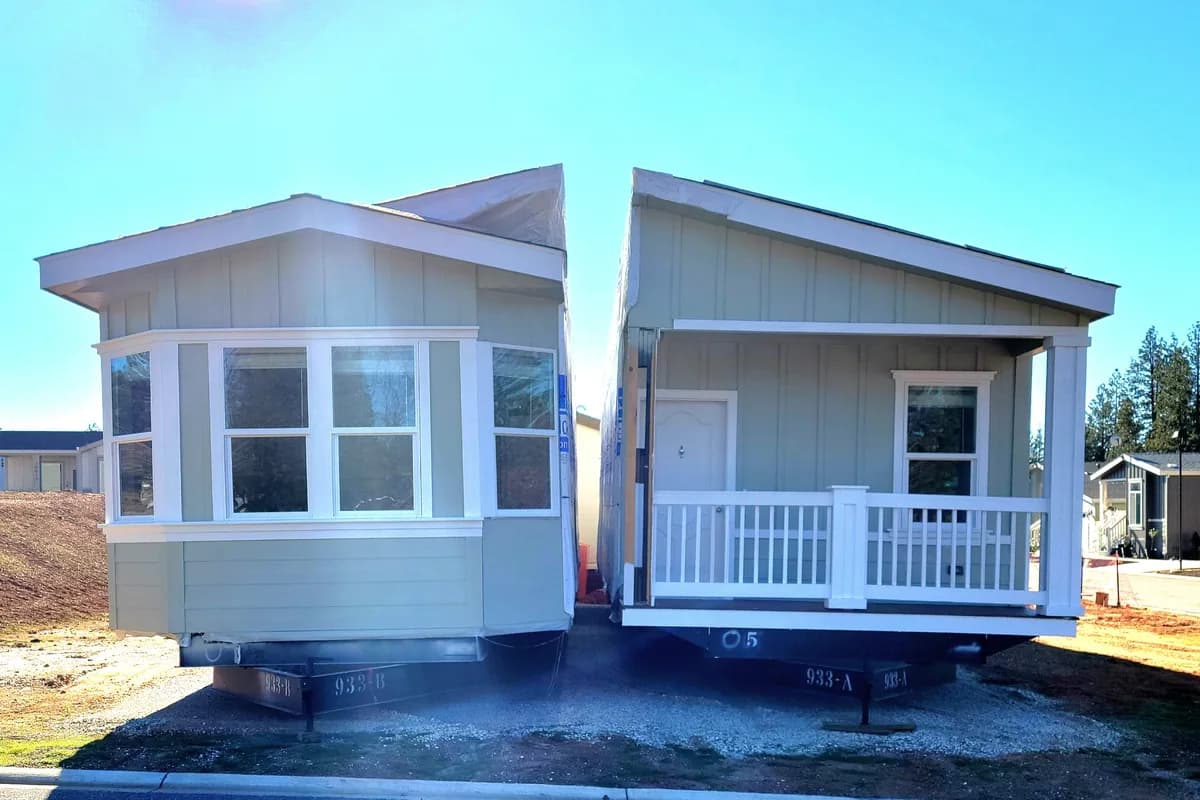
A manufactured home has two layers that matter here. Underneath, steel I-beams run the length of the home and rest on piers and footing pads. On top of that frame sit floor joists and the floor decking you walk on. Leveling works on the bottom layer: a crew adjusts piers, caps, and shims so the frame sits closer to true. Floor repair works on the top layer: cutting out and replacing decking that has swollen, delaminated, or rotted.
The trouble is that both can feel the same when you step on them. Knowing which one you probably have helps you call the right trade, describe the problem clearly, and avoid paying to fix one layer while the other keeps moving. For how the support layer is built, see piers, pads, and shims explained.
Clues that point to the floor itself
- It is small and local. The soft area is a patch you could cover with a rug, and the floor around it feels normal.
- It sits near water. In front of a toilet, along a tub or shower, under a kitchen or bathroom sink, around the water heater closet, near the washer, or just inside an exterior door.
- It feels spongy or crunchy rather than just bouncy, and the floor covering may be lifting, bubbling, or stained.
- A level shows little slope across the room even though one spot gives underfoot.
- Doors and windows still work normally. Floor damage alone rarely makes doors drag or latches miss.
Many older homes in Kern County parks were built with particleboard-type decking that loses strength once it stays wet. A slow leak at a toilet wax ring or supply line can soften it for months before anyone notices, especially in summer when the surface looks dry.
Clues that point to piers and settlement
- You can measure slope across a whole room or hallway, not just one spot. Marbles roll, or a level placed in several spots reads off in the same direction.
- Doors drag, swing on their own, or will not latch, and windows bind or show uneven gaps.
- Cracks appear above door frames, at ceiling seams, or along wall panel joints.
- Multi-section homes show gaps at the marriage line where the halves meet, on the ceiling, floor, or roof.
- The bounce follows a line along the length of the home, often over a beam, and you can feel a dip as you walk it.
- Things changed with the seasons, such as doors that worked in spring and drag after a long, dry Bakersfield summer, or after the first winter storms.
If several of these show up together, the signs your mobile home needs leveling guide walks through them in more detail.
When it is both
In older Kern County homes it is common to find both problems at once, and they can feed each other. A leak that softened the bathroom floor may also have kept the soil under that corner wet, letting the pad below it sink. A pier that dropped away from the frame can let the floor above flex every day until the decking near a seam starts to break down.
That is why the order of repairs matters. In many cases the home is leveled first and the floor is repaired afterward, so new decking goes onto a frame that is already where it should be. Fix active leaks before anything else. A contractor who sees the home from inside and underneath can confirm the right sequence for your situation.
A simple at-home check
- Mark each soft or bouncy area with painter’s tape and note what is nearby (bathroom, sink, exterior door, water heater).
- Place a small level or a phone level app in the hallway, kitchen, and each bedroom, in both directions. Write down which way it leans.
- Open and close every exterior and interior door and note any that drag or will not latch.
- Look for water clues: stains on the floor covering, a toilet that rocks, a musty smell in a cabinet, or a water bill that crept up.
- With the park’s okay and only on a dry day, shine a flashlight through a skirting access opening and look for wet ground, sagging insulation or belly wrap, or a pier that leans or no longer touches the beam. Do not crawl under the home or adjust supports yourself.
Take dated phone photos. Those notes make the first call much more useful, whether you end up needing mobile home leveling, a floor repair contractor, a plumber, or more than one.
When to treat it as urgent
Keep weight off any spot that feels like it is giving way, and call for urgent leveling help if you see a sudden drop at one end of the home, a pier that has tipped or slid, doors that suddenly will not close, or plumbing that is pulling apart under the floor. Water actively pooling under the home should be stopped at the source right away.
Buying, selling, or facing a Title 25 date
Soft floors and settlement are two of the first things a buyer notices on a walk-through. If a Kern County home is going on the market or a buyer has a Title 25 inspection scheduled, sorting out which layer is the problem early helps keep repairs from crowding the closing date. Buyers can use the used-home leveling red flags list, and the leveling cost factors guide explains what usually moves a quote.
Local notes across Kern communities
Bakersfield and Oildale: Older park homes often have original decking and original block piers, so a soft bathroom floor and a sloping hallway in the same home are not unusual.
Delano, Wasco, Shafter, Lamont, and Arvin: Homes on lots near irrigated fields, orchards, or canals may see one side stay wetter, which can affect both the pads under that side and any decking near an exterior door on that side.
Taft and Tehachapi: Sloped lots and colder mountain-edge winters around Tehachapi bring their own access and moisture questions. Note slope and driveway details when you request help.
See local details for Bakersfield, Oildale, Lamont, Wasco, or the full Kern County service area.
Educational disclaimer
This guide is general information for Kern County manufactured-home owners, buyers, and park managers. It is not an engineering evaluation, a code or Title 25 determination, or a substitute for an on-site visit. Do not adjust, remove, or add supports yourself, and get park approval before any under-home work.
Not sure which problem you have? Call (661) 555-0140 or contact Bakersfield Mobile Home Leveling with your city or ZIP, where the soft or sloping area is, and what is nearby. You can also browse all Kern County guides.