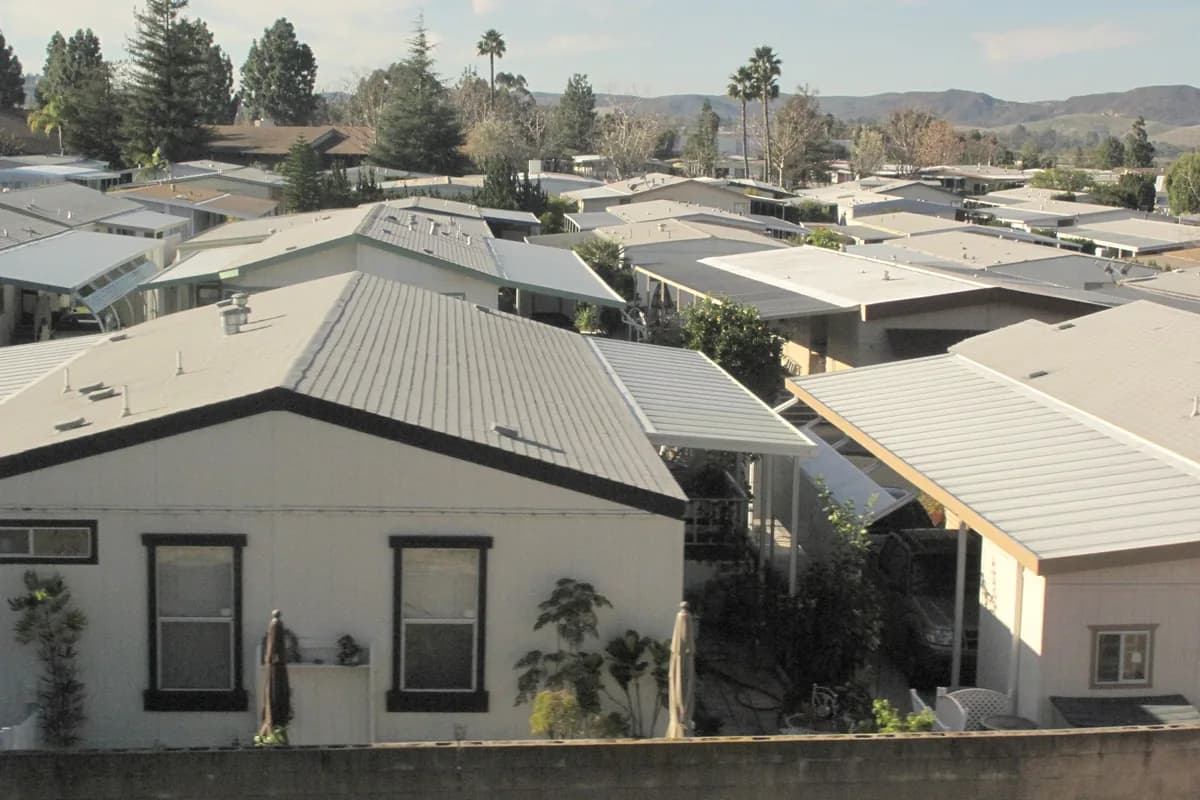
Why a dry county still needs a rainy-season plan
The southern San Joaquin Valley is one of the drier parts of California, and most of the rain Bakersfield does get falls between roughly November and March. That is exactly why fall prep matters. Through a long summer of triple-digit heat, the soil under footing pads dries and shrinks. Then a handful of soaking storms—often followed by weeks of damp tule fog in December and January—wet that soil again. Problems usually come from uneven wetting: one corner gets carport runoff, one side gets sprinkler overspray, a low space collects a neighbor’s water. Those pads soften while the rest of the home stays put.
You usually do not see the result right away. It shows up weeks later as a door that drags in January, a soft spot near the bathroom, or a hallway that feels off by spring. If you want the mechanics of how beams, piers, and pads carry the home, read piers, pads, and shims explained; this page is the practical to-do list for the weeks before the rain.
Fall is also the easiest time to get work done. Park lanes, gravel drives, and orchard-edge lots are firm, crews are not tracking mud through skirting openings, and you are not competing with post-storm urgent calls.
Step 1: Roofline, gutters, and downspouts
- Clear gutters of leaves, dust crust, and orchard debris—common on homes near almond, pistachio, and citrus rows around Delano, Wasco, Shafter, and Arvin.
- Check where each downspout empties. If it dumps at the skirting, add an extension or splash block so water lands several feet from the home and flows away.
- Watch carports and awnings. Attached covers shed a lot of water onto one corner. In many Kern parks the carport runoff line lands right on the entry-side pier row.
- Look for drip trenches. A straight line of bare or eroded soil along the skirting means water is concentrating there every time it rains.
- Find the AC condensate and water heater lines. They drip all year, not just in winter, and often keep one pad damp.
Step 2: Grading, sprinklers, and where water wants to go
Stand at each corner and ask: if it rained hard right now, which way would water run? Ideally the ground slopes away from the home. Common problems around Kern County homes include:
- Planter beds, rock borders, or mulch piled against the skirting, which hold water at the base.
- Patios, slabs, or pavers that tilt toward the home rather than away.
- Older Bakersfield and Oildale park spaces where the pad sits slightly below the lane, so runoff from neighbors collects under your home.
- Private lots next to irrigated fields, orchards, or canals near Delano, Wasco, Shafter, Lamont, and Arvin, where the ground near the home stays wetter than the rest of the yard.
- Sloped lots in Taft and on the Tehachapi side, where rain runs downhill toward the uphill wall of the home if there is no swale or diversion.
Sprinklers deserve their own check. Lawns and shrubs get watered all summer, and many timers keep running into November. Turn timers down or off once rain starts, and aim heads away from the skirting. A leaking hose bib can do as much damage over a season as a storm.
In a park, talk to the manager before regrading or trenching—drainage often crosses space lines and many parks have rules about soil work. On a private lot, small changes such as pulling mulch back or extending downspouts are often enough.

Step 3: Look at (and behind) the skirting
Skirting is not structural, but it tells you a lot. With the park’s okay, open an access panel on a dry day and take a flashlight look from the opening—no need to crawl in:
- Vents: make sure skirting vents are open and not blocked by soil, weeds, or stored items. Moisture trapped under the home lingers through foggy valley stretches.
- Signs of past water: silt lines, dried mud, or rust staining low on steel piers suggest water has pooled before.
- Supports: look for block piers that lean, pads that sit lower than their neighbors, shims or wedges that have slipped or split, or a pier that no longer touches the beam. Do not adjust supports yourself.
- Skirting shape: panels that bow out, buckle, or pull away at the bottom can mean the home shifted or soil moved.
- Ground cover: if there is a vapor barrier, note whether it is torn, bunched up, or holding puddles.
If you are not comfortable opening skirting, skip it—a leveling crew checks this as part of a visit. For a full list of what settlement looks like from inside, see signs your mobile home needs leveling.
Step 4: Record an inside baseline
Before the weather turns, write down how the home behaves now. Open and close every exterior and interior door, check whether windows slide evenly, set a small level in the hallway and kitchen, and look for cracks at ceiling seams, wall panel joints, and above door headers. Snap a few phone photos with the date. If something changes after the first big storms, you will know it is new—and you can describe it clearly when you call.
Step 5: Decide whether to book leveling now
- Everything looks and feels fine: handle the drainage items, then re-check in spring after the rains. Our re-leveling frequency guide covers typical timing cues.
- Minor symptoms (a door that drags, a slight slope): fall is a good time to schedule a leveling visit, while supports can be set on dry ground. The leveling-day prep guide explains access and skirting steps.
- Something looks wrong under the home (a leaning or unsupported pier, a sudden drop at one corner, doors that will not latch): treat it as urgent leveling rather than waiting out the winter.
Selling, buying, or facing a Title 25 date?
Winter storms and escrow deadlines do not mix well. If you plan to list, or a buyer has a Title 25 inspection on the calendar, a fall leveling and drainage check keeps support work from landing in a rain week when skirting is muddy and staging is harder. See the Title 25 checklist for Kern County resale and, for buyers, the used-home leveling red flags. If a park or lender has also mentioned seismic bracing, ask about it at the same visit— bracing vs leveling explains how the two scopes differ.
Local notes across Kern communities
Bakersfield and Oildale: Many older park homes sit on original block piers, and some spaces sit lower than the lane. Ask your manager which rows pond after storms— neighbors often share the same drainage story.
Delano, Wasco, and Shafter: Farm irrigation, canal edges, and orchard runoff can keep one side of a lot wetter well into winter. Note which side stays damp and when.
Lamont and Arvin: South-valley lots near the foothills can see sheet runoff during heavier storms. Private lots often have mixed pier types from past repairs, so old invoices or photos help.
Taft and Tehachapi: West-side hillside lots near Taft and mountain-edge lots around Tehachapi bring slope and access questions, and Tehachapi sees colder nights and wetter winters than the valley floor. Share driveway, gate, and slope notes when you request help.
Homes across Bakersfield, Oildale, Delano, Arvin, Tehachapi, and the rest of our Kern County service area follow the same basic pattern: dry summer, a short wet season, and settlement that shows up afterward.
A note for park managers
Fall is a good time to walk the park for low spaces, clogged lane drains, and homes whose downspouts empty onto a neighbor’s pad. Batching several spaces into one leveling or inspection visit before the rains is easier on residents and scheduling, and it reduces post-storm complaints.
After a big storm
On the first dry day after a heavy storm, take a quick look: is water still standing near the skirting? Did a downspout extension wash out? Do doors or floors feel different from your fall baseline? Small changes are worth noting and watching; a sudden change is worth a call.
Educational disclaimer
This checklist is general guidance for Kern County manufactured-home owners and park managers. It is not an engineering evaluation, a code or Title 25 determination, or a substitute for an on-site visit. Do not adjust, remove, or add supports yourself, and get park approval before any under-home or grading work.
Want a pre-winter check? Call (661) 555-0140 or contact Bakersfield Mobile Home Leveling with your city or ZIP, park name and space or private-lot address, and what you noticed. You can also browse all Kern County guides.