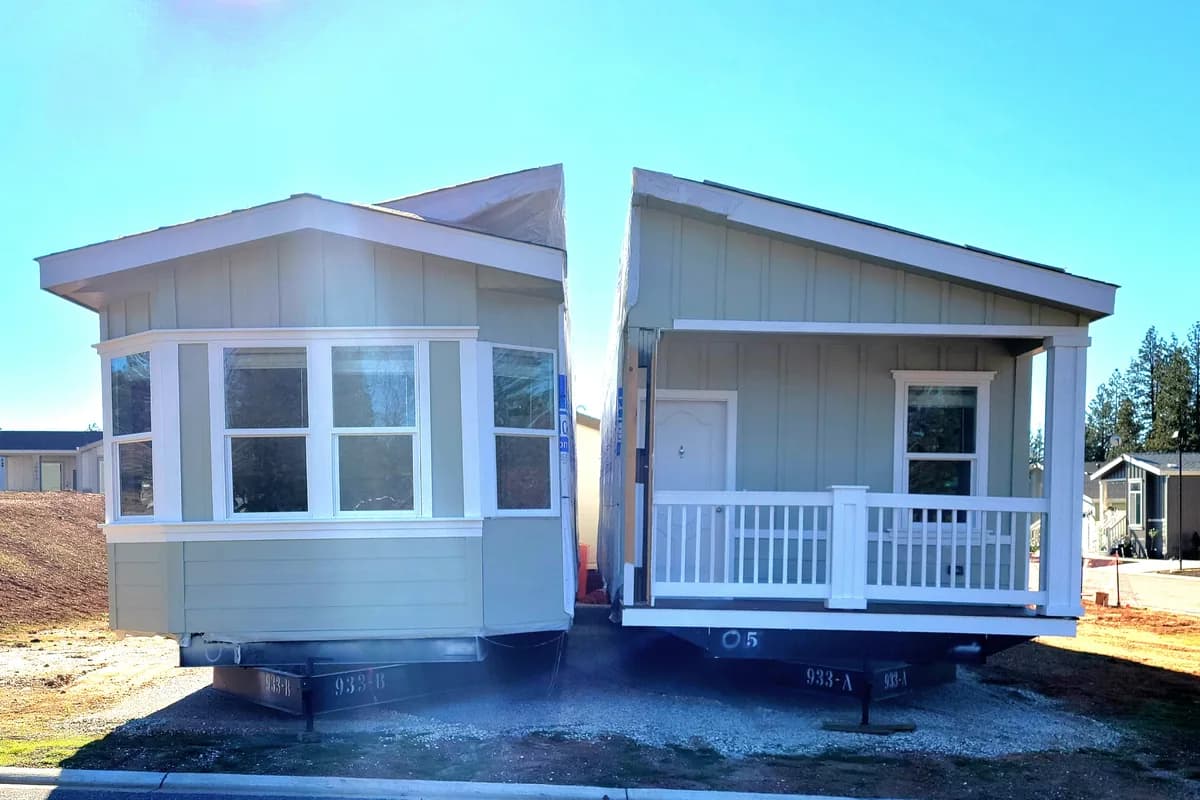
Two structures that move on their own
A manufactured home rests on steel I-beams that sit on piers and footing pads. Most add-ons around it, such as wood or composite decks, covered porches, entry steps, wheelchair ramps, awnings, and carports, have their own posts or footings in the ground next to the home. The two systems were set at matching heights on install day, but they do not settle together.
When the piers under one side of the home sink, the threshold drops while the porch stays put. When a porch footing sinks in soft soil, the porch drops while the home stays put. Either way, the joint between them is where the change becomes easy to see. For how the support layer under the home is built, see piers, pads, and shims explained.
What add-ons can tell you
- A new or growing gap at the threshold. The top step or porch deck sits lower or higher than the door sill than it used to. Photograph it with a tape measure in the shot so you can compare later.
- A door near the porch drags or will not latch, while doors at the other end of the home work fine. That pattern points to settlement on the entry side.
- Ledger boards or brackets pulling away from the siding, visible screw or bolt movement, or torn flashing where a deck or awning meets the home.
- Porch or deck boards sloping toward or away from the home more than they did when built, especially after a wet winter.
- A carport or awning post out of plumb, or a roof panel that has shifted at its connection to the home.
- Cracked or separated skirting right where the add-on meets the home, which can show the two pushing or pulling on each other.
One clue alone may just be an aging porch. Several together, especially with sloping floors or sticking doors inside, are worth comparing against the signs your mobile home needs leveling.
Why attachment matters on leveling day
Many add-ons are built to stand on their own and only butt up against the home. Others are fastened to the wall or rim with a ledger board or brackets. A tightly fastened add-on can fight the home in two ways: if its own supports sink, it can drag that wall down, and if its supports stay put while the home settles, it can hold one edge up and twist the frame.
When a crew raises or lowers the home to bring it back to level, a fastened deck, porch, or awning can bind, crack, or pull loose. A leveling contractor needs to know what is attached, and sometimes a connection has to be loosened, or an add-on supported separately, before the home can move. Tell the contractor about every attached structure when you request a quote, and see preparing for leveling day for the rest of the day-of checklist.
Water from roofs you forget about
Carports and awnings add a lot of roof area next to the home, and they usually drain straight off one edge. In many Kern parks that drip line lands beside the entry-side pier row. During the November-through-March rains, repeated soaking on that line can soften the soil under nearby footing pads, which is one reason the entry side of a home is often the side that drops. The rainy-season prep checklist covers gutters, splash blocks, and grading that keep that water away from the piers.
Order of repairs
- Stop any water problem first, such as a carport or awning that drains onto the pier line.
- Have the home checked and leveled, so the frame and door thresholds are where they should be.
- Then reset, repair, or rebuild steps, porches, decks, and ramps to meet the new threshold height, with their own supports.
- Confirm permits and park approval for any new or changed accessory structure before the work, not after.
Building a new deck or porch first and leveling later often means the new work no longer lines up. If you are planning an add-on anyway, a leveling check beforehand is cheap insurance. The leveling cost factors guide explains how access and attached structures can move a quote.
Permits, parks, and Title 25
In California, awnings, carports, porches, decks, and steps at manufactured homes are generally treated as accessory structures under Title 25 and usually need a permit from the enforcement agency for that location, which is HCD or a local agency depending on the park. Most parks also require approval before anything is built or changed. Unpermitted add-ons can come up during a sale, so if a Title 25 inspection or escrow is ahead, sort them out early. Agents can use the Title 25 and bracing guide for agents, and buyers can use the used-home leveling red flags list. This guide is not a permit or code determination.
When to treat it as urgent
Keep people off any steps, porch, or ramp that has shifted enough to wobble, tip, or leave a trip gap at the door, and call for urgent leveling help if a sudden drop at the entry side comes with doors that will not close, a pier that has tipped, or plumbing pulling apart under the home. An awning or carport that is sagging or pulling off the home after a storm should be kept clear until it is checked.
Local notes across Kern communities
Bakersfield and Oildale: Older park homes often have porches, awnings, and carports added over the years by different owners, so attachment details vary a lot from one space to the next.
Delano, Wasco, Shafter, Lamont, and Arvin: Homes on lots near irrigated fields, orchards, or canals may see porch footings and home piers on the wetter side move more than the rest.
Taft and Tehachapi: Sloped lots mean taller steps and decks on the downhill side, and colder winters around Tehachapi add freeze-and-thaw to the mix. Note slope and step height when you request help.
See local details for Bakersfield, Oildale, Delano, Tehachapi, or the full Kern County service area.
Educational disclaimer
This guide is general information for Kern County manufactured-home owners, buyers, and park managers. It is not an engineering evaluation, a permit or Title 25 determination, or a substitute for an on-site visit. Do not adjust, remove, or add supports under the home yourself, and get park approval before any under-home or add-on work.
Seeing gaps at your steps or porch? Call (661) 555-0140 or contact Bakersfield Mobile Home Leveling with your city or ZIP, which add-ons are attached, and a few photos. You can also browse all Kern County guides.